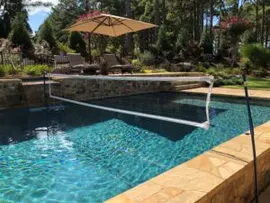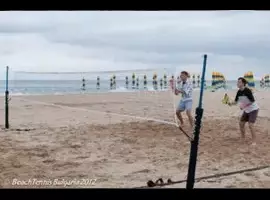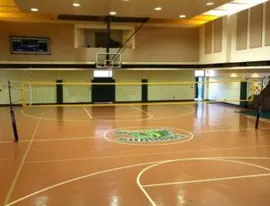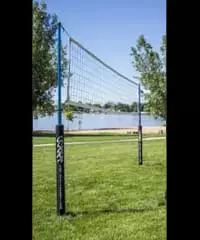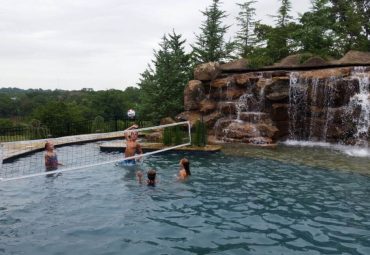

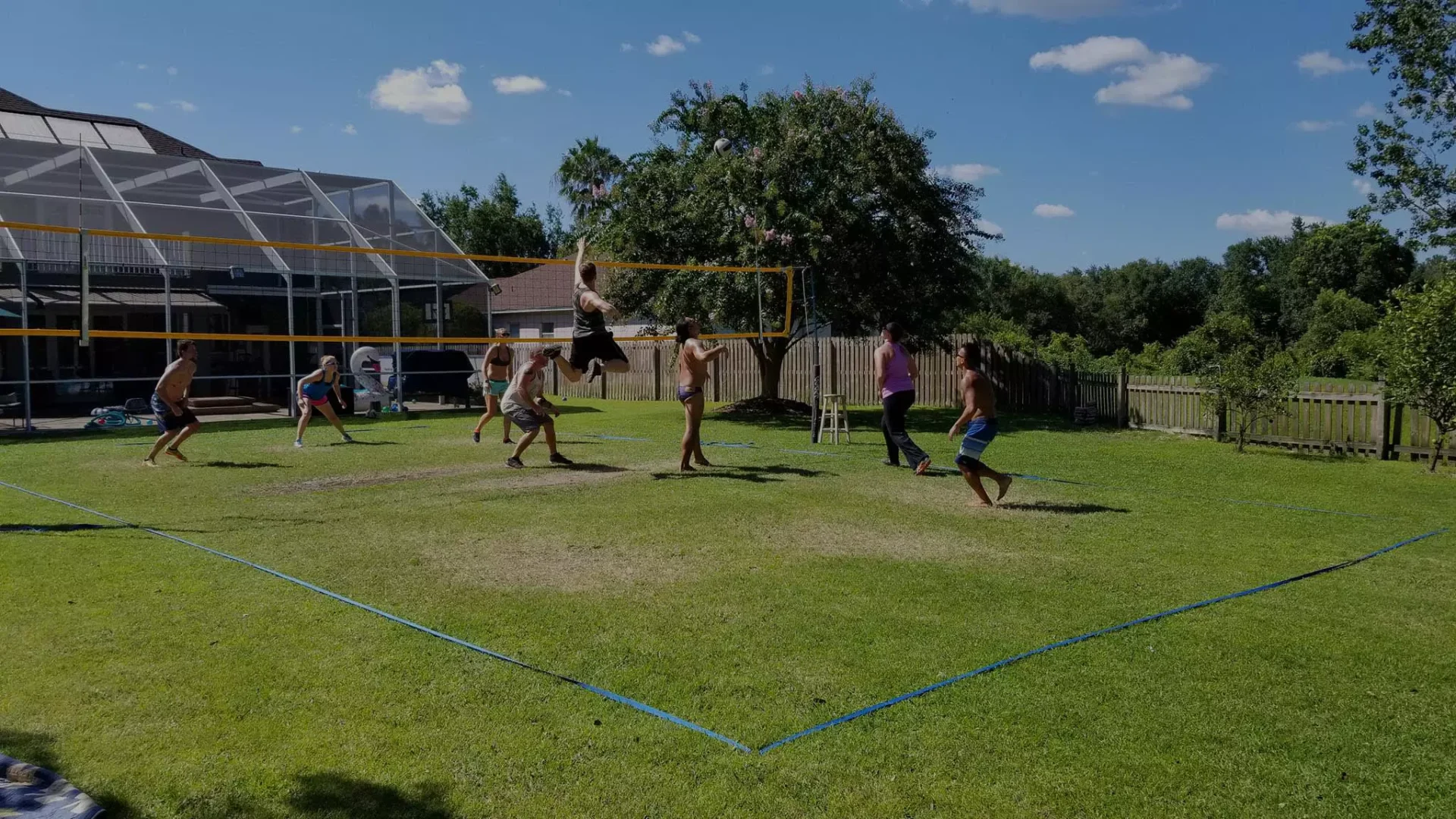
From backyards to beaches, pro tournaments to pools, Cobra’s portable volleyball net systems and volleyball court equipment stand up to whatever you can spike, smash, or throw at them – indoors, outdoors, and anywhere at all!
We do custom size volleyball sets, installation on artificial turf or concrete, custom pool designs, special applications, and more.
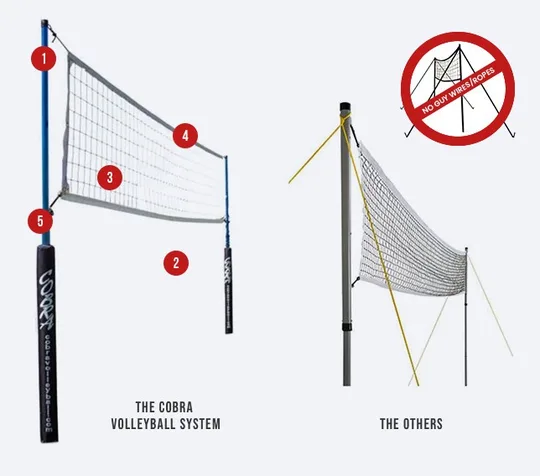
Designed to set up quickly, and last a lifetime.
- No Guy Wires/Ropes
- Fast One Person Set Up
- Superior Net Play
- Stays Tight All Game
- Versatile – Play 5 Different Games
Your Go-To Volleyball Net Company
Looking for a one-stop shop for volleyball equipment or accessories online? You’ve come to the right place! Cobra Net Systems has covered you with top-quality commercial volleyball nets with a lifetime guarantee. You’ll never need to buy another when you purchase a quality net from our trusted volleyball net company.
Our volleyball net company features a patented system that’s easy to install and designed to stand up to hard play. As trusted volleyball net manufacturers since 1992, we’re a leading custom net equipment company known for our fair prices and unrivaled quality. Whether you’re shopping for a professional-grade volleyball net for a major tournament or a new set-up for the backyard, you can rely on our products — all of which are designed with safety and longevity in mind.
Don’t wait any longer — buy one of our premium custom volleyball nets today and enjoy the action!
Full-Service Volleyball Net Supplier
Cobra Net Systems designs volleyball nets for commercial and residential customers. Our volleyball net and post manufacturers can customize your new net to suit your setting, whether it’s indoors or outdoors. Our nets are perfect for professional courts, the beach, the backyard, school gyms, recreation centers, fitness centers, and swimming pools. We’ve designed our net systems for a fast, one-person set-up. They have no dangerous guy wires or pegs, and their poles and ground stakes are made with aluminum, so you can expect them to last and perform as well as the first day you installed them.
Volleyball Net Equipment Company
As a leading volleyball net equipment company, Cobra Net Systems features both outdoor and indoor volleyball courts for sale. Our portable volleyball nets are patented and trusted by countless people and volleyball leagues across the country. You won’t find other systems that boast our flex pole technology and knot-free nets anywhere on the market.
Not only are our commercial volleyball nets durable for even the roughest professional gameplay, but they also perform with reliable functionality that you can trust. No matter how often you use our nets, they’ll hold up through countless indoor and outdoor matches.
The Best Volleyball Court Systems Online
Finding a volleyball net company that features reliable and easy-to-use nets that won’t cost you a fortune is imperative. Our trusted volleyball net company features portable volleyball nets that are fairly priced and guaranteed for life. As experienced volleyball post and net manufacturers, we have developed our own technology to create our premium net systems. Shop for online volleyball court systems and discover why customers prefer our nets to other sellers. Their superior performance and durable design routinely impress coaches, pro players, and recreational enthusiasts.
Professional Volleyball Nets for Sale
Cobra Net Systems features professional volleyball nets that are virtually indestructible. We also feature beach tennis courts for sale and other top-of-the-line nets that come with a lifetime guarantee. We have customers routinely tell us that they’re still enjoying the equipment they purchased from us 30 years ago. Instead of routinely replacing poor-performing nets each year, choose our quality products at Cobra Net Systems.
Shop online for our patented custom professional volleyball nets. Our nets don’t lose tension and don’t need replacing. Because our net systems are lightweight, you can transport them easily and set them up in minutes. There’s no need to struggle with unsafe guy wires or tie-down ropes with our system. Our flex pole technology and easy adjustment system allow you to set up your net for superior play in mere minutes. No other company offers this technology and a lifetime guarantee as an added bonus.
Reach Out To Us Today!
Whether you’re looking for a new net for your personal use or a more competitive atmosphere, you need a trusted volleyball net company handling the job. Cobra Net Systems has provided our customers with volleyball nets that have stood the test of repeated high-intensity games across various playing surfaces! Contact a team member today for more information about our volleyball courts, nets, posts, and other components!
"*" indicates required fields